ℹ️ Click on the + to view the hiking details.
🥾 Trail Info 🔽
- 📍 Start and End: The hike starts at Griesalp. Even the journey there is a highlight, with the PostBus from Reichenbach im Kandertal tackling gradients of up to 28% on the final section of route 220. We finish the hike at Kiental, Dorf, where the PostBus takes us back to Reichenbach. The route can also be hiked in the opposite direction, but make sure to check the timetable for the bus up to the starting point.
- 🚶♀️➡️ Distance: The entire hike is around 7.8 km (4.8 mi.), making it a pleasantly manageable route.
- ⏱️ Time: The actual hiking time is around 2.5 hours. With photo stops, breaks and enough time to enjoy the scenery, we recommend allowing around 3.5 to 4 hours.
- 📊 Ascent and Descent: The hike includes around 30 m (98 ft.) of ascent and 490 m (1,608 ft.) of descent.
- 🥵 Difficulty: The hike is easy to moderate. With very little ascent and a manageable overall distance, it is not particularly demanding in terms of fitness.
- 📆 Best Time to Visit: The hike is especially beautiful from summer to early autumn. Snow can linger on the higher sections well into spring, while summer and early autumn usually offer the best combination of accessible trails, clear conditions and beautiful scenery.
- 🌿 Trail Surface: Around 5 km (3.1 mi.) follow hiking trails, while the remaining 3 km (1.9 mi.) run along quiet side roads. Some sections also follow the spectacular mountain road used by the PostBus.
- 🥾 Equipment: Good hiking or mountain hiking boots are recommended. Trekking poles can be especially helpful on the longer descent. Bring enough water and snacks, as there are only a few places to stop for food along the route.
- 👨👩👧 Family Check: A varied family hike with a gorge, Tschingelsee, rushing mountain water and trails along the river. It is well suited for children who are already confident hikers. The route is not stroller-friendly, as several sections follow narrow and uneven hiking trails.
- 🐕 Hiking with a Dog: Dogs can join the hike, but they must be kept on a leash in the protected area around Tschingelsee and should not enter the water. During the descent through the gorge, some sections also cross metal grating walkways, which may be uncomfortable for sensitive dogs.
- 🚗 Getting There: From Reichenbach im Kandertal, PostBus line 220 runs seasonally into the upper Kiental. In 2026, buses operate daily from 23 May to 18 October. As smaller vehicles are used on the steep mountain road, seats are limited. Outside the operating season, you can park in Kiental or Tschingel and plan the route as an out-and-back hikeinstead.
- 💰 Cost: The hike itself is free. A one-way PostBus ticket from Reichenbach im Kandertal to the starting point costs CHF 20.40, or CHF 10.20 with a Half Fare Travelcard. The journey is included with a GA Travelcard.
- 📌 Signposts & Markings: From the starting point, follow the signs towards Tschingelsee and then continue along the PostBus Adventure Trail. Later, the route descends across walkways through Griess Gorge before continuing towards Kiental.
- 📶 Mobile Reception: Mobile coverage can be weak or completely unavailable along parts of the route. In some sections, we only had an SOS connection, so it is best to download maps and any important information for offline use before starting the hike.
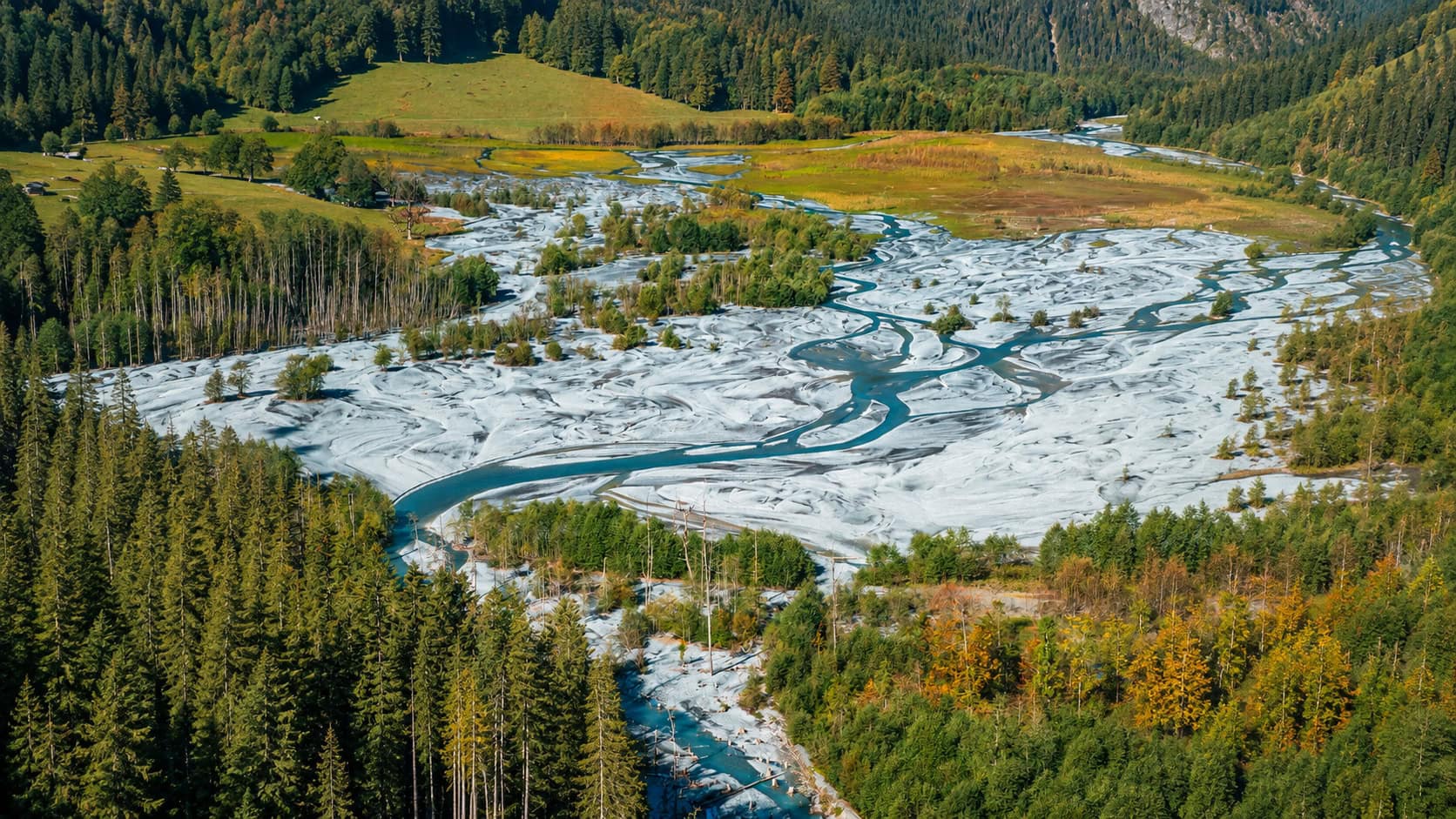
- 📸 Best Photo Spots: One of the most photogenic locations is definitely Tschingelsee, with its wild floodplain, pale gravel banks and milky blue-white water channels. In early autumn, the combination of water, forest and dramatic mountain scenery creates an especially beautiful atmosphere.
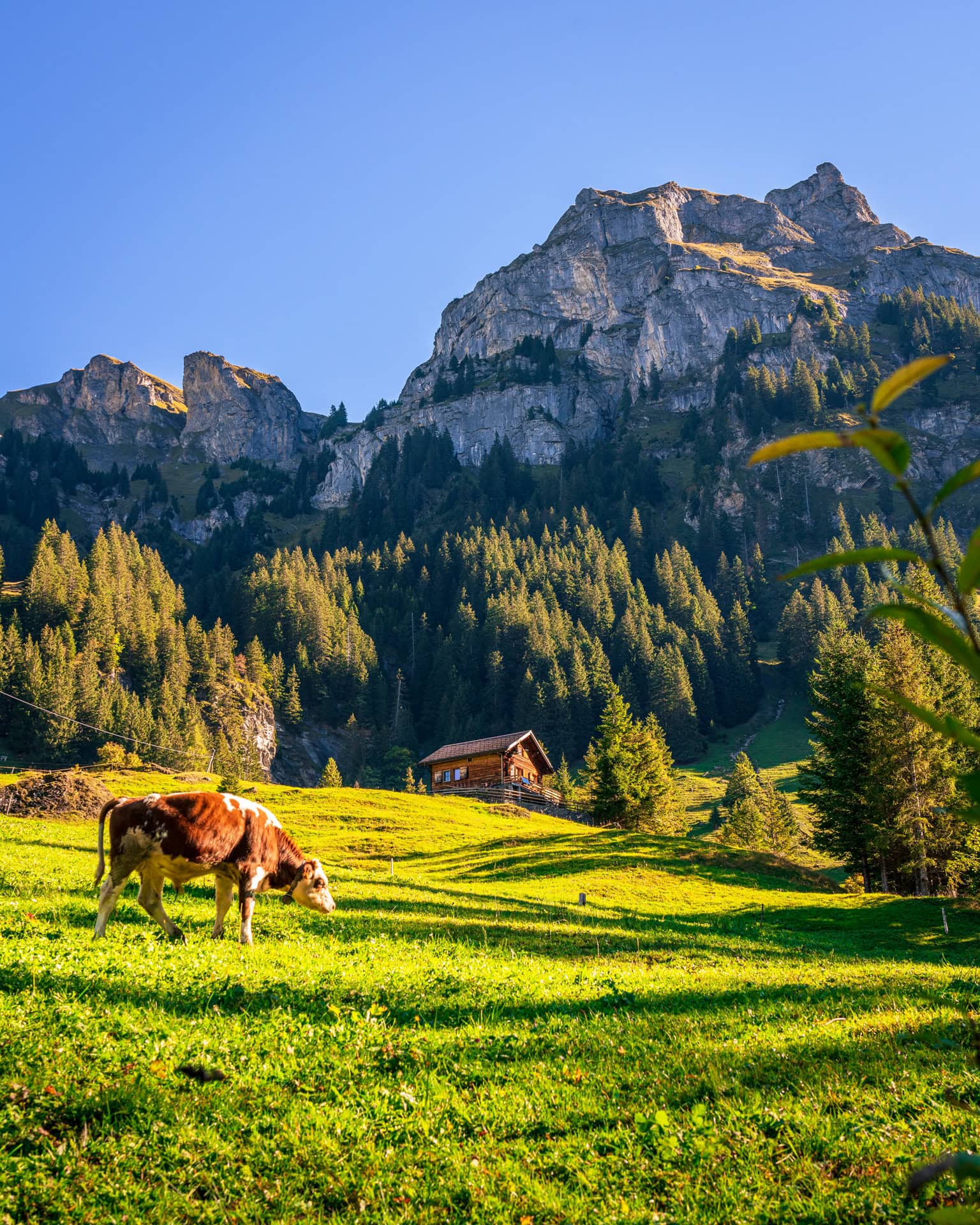
- 🦌 Wildlife: With a little luck, you may spot chamois on the slopes above the starting point. Along the hike, you will also regularly see cows and goats grazing on the alpine meadows, adding to the traditional mountain scenery of Kiental.
- 🌄 Highlights: Just before the descent into Griess Gorge, you get a beautiful view over Tschingelsee and its branching water channels. From here, the landscape becomes noticeably wilder, with rocky cliffs, the gorge and turquoise mountain water accompanying us for large parts of the hike.
- 💡 Tips: Tschingelsee lies within a protected nature reserve, so do not fly a drone here and make sure to respect the local conservation rules. In Griess Gorge, it is also worth taking a short detour to a hidden waterfall that drops dramatically between the rocks.
- 🏡 Accommodation & Restaurants: There are several mountain inns and restaurants along or close to the route, especially near the starting point, around Pochtenalp, and in Kiental village. As opening hours can be seasonal, we still recommend bringing enough water and some snacks with you.
The Spectacular Journey into Kiental
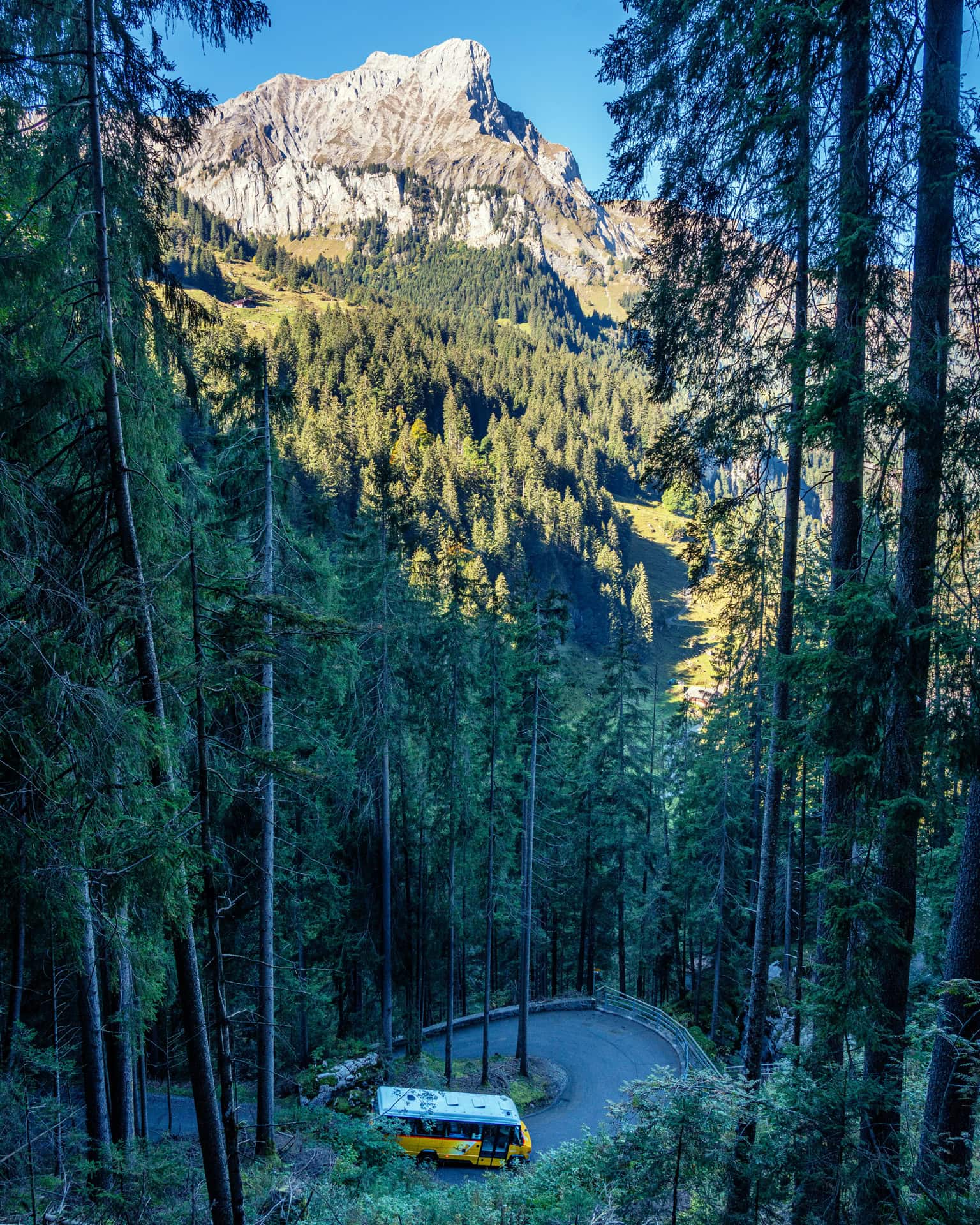
This hike actually begins in Reichenbach im Kandertal, where we board the small PostBus on route 220. The final section turns the journey itself into an adventure: with gradients of up to 28%, the PostBus winds through extremely tight hairpin bends into the upper Kiental. Sitting back and relaxing is almost impossible because the views and the road keep surprising us around every corner.
Before setting off, we stock up on enough drinks and snacks in Reichenbach. During our visit at the end of September, several places to eat along the route were already closed. The bus ride ends at around 1,400 m (4,593 ft.), which is also where our hike begins.
Between Alpine Meadows and Switzerland’s Steepest PostBus Route
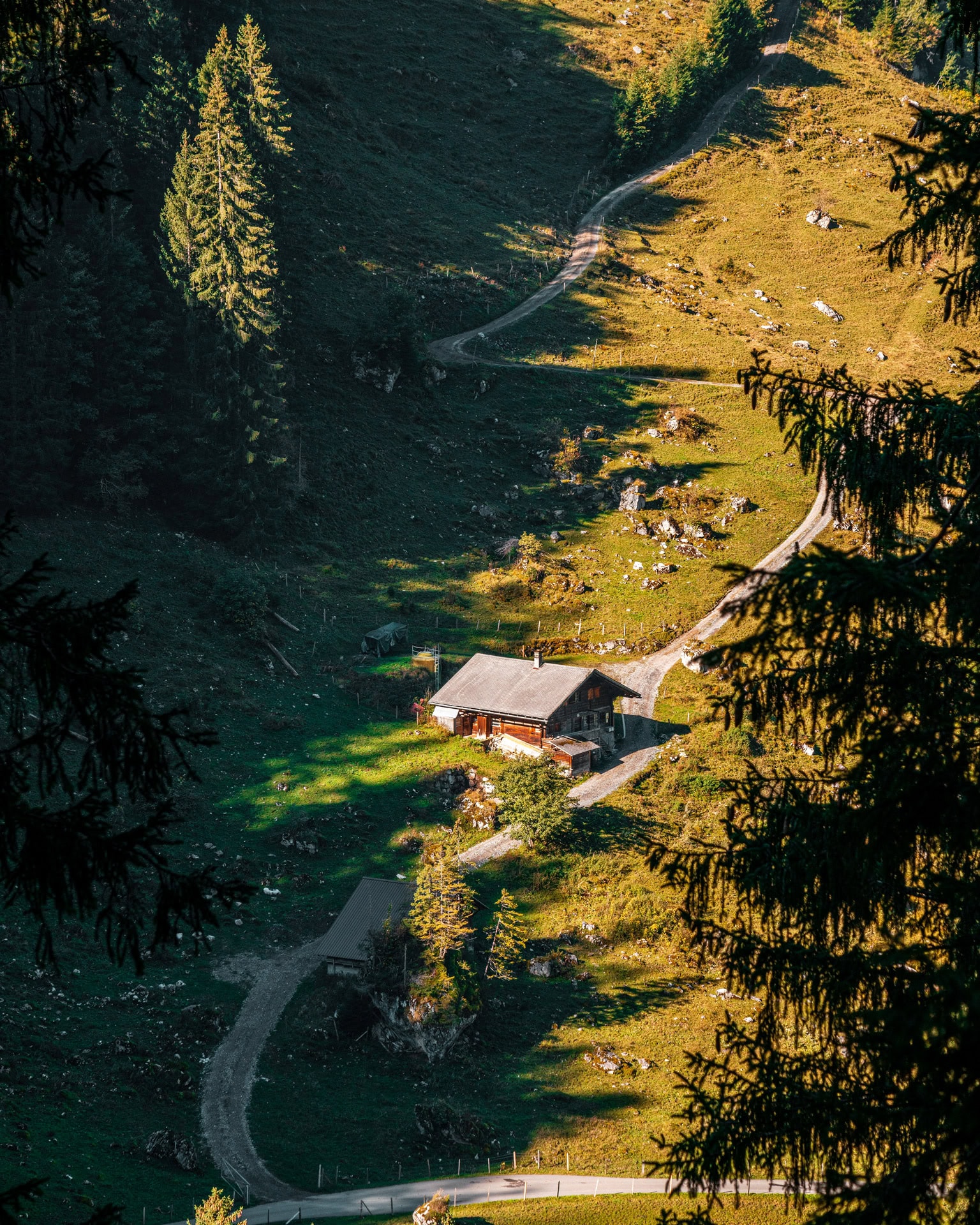
From the starting point, we follow the PostBus Adventure Trail towards Tschingelsee and Griess Gorge. At first, the trail leads across open alpine meadows, passing cows grazing peacefully in the grass.
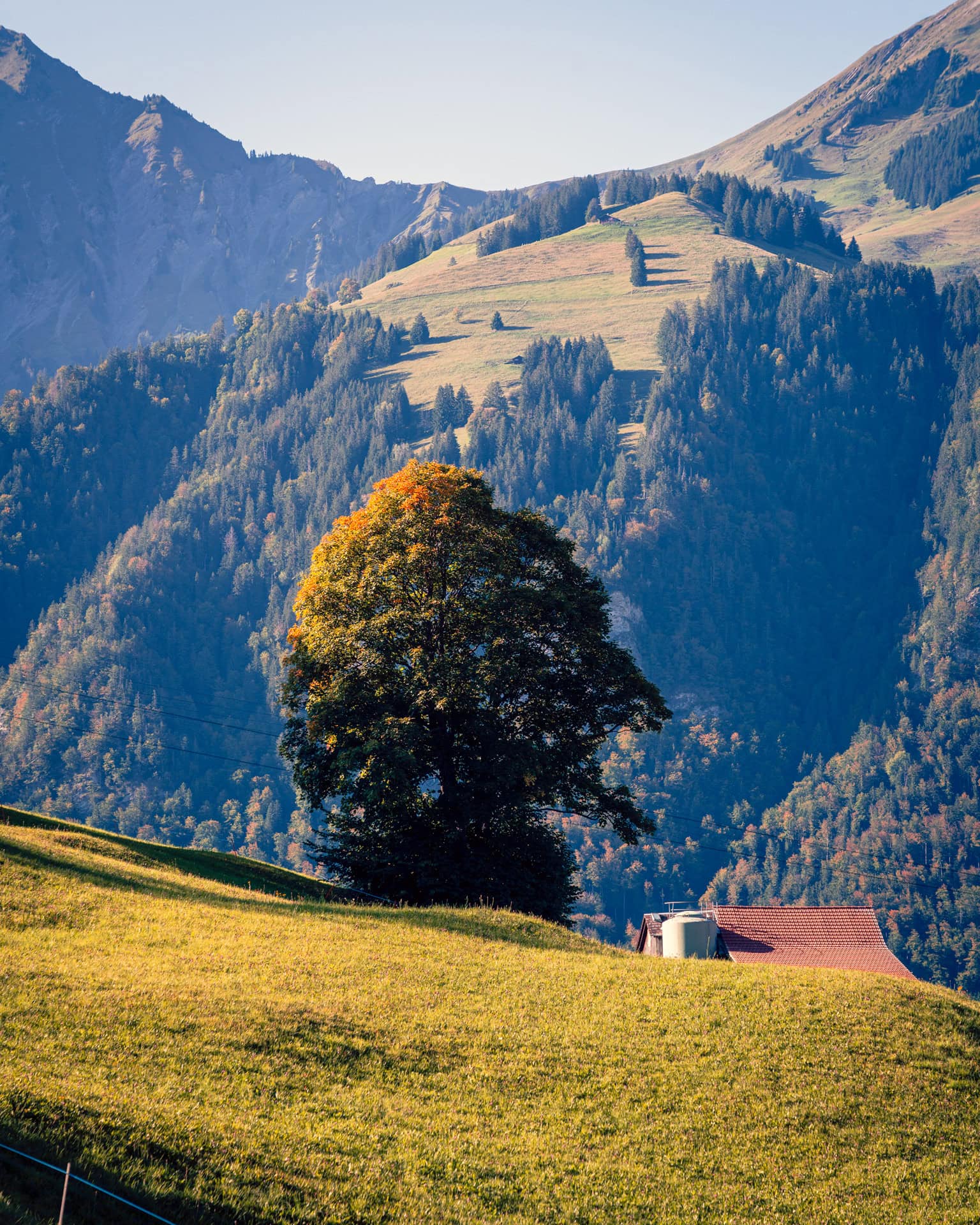
Within the first kilometre (0.6 mi.), we quickly realise that we have timed our visit almost perfectly for early October. The first trees are glowing in shades of yellow and orange, slowly transforming the landscape into a sea of autumn colours. Parts of the hike run directly alongside the steep mountain road, and whenever one of the small PostBuses carefully navigates the tight bends, we almost automatically stop to watch. Just the thought of driving up here ourselves is enough to make me break into a sweat. 😅
The First View of Tschingelsee
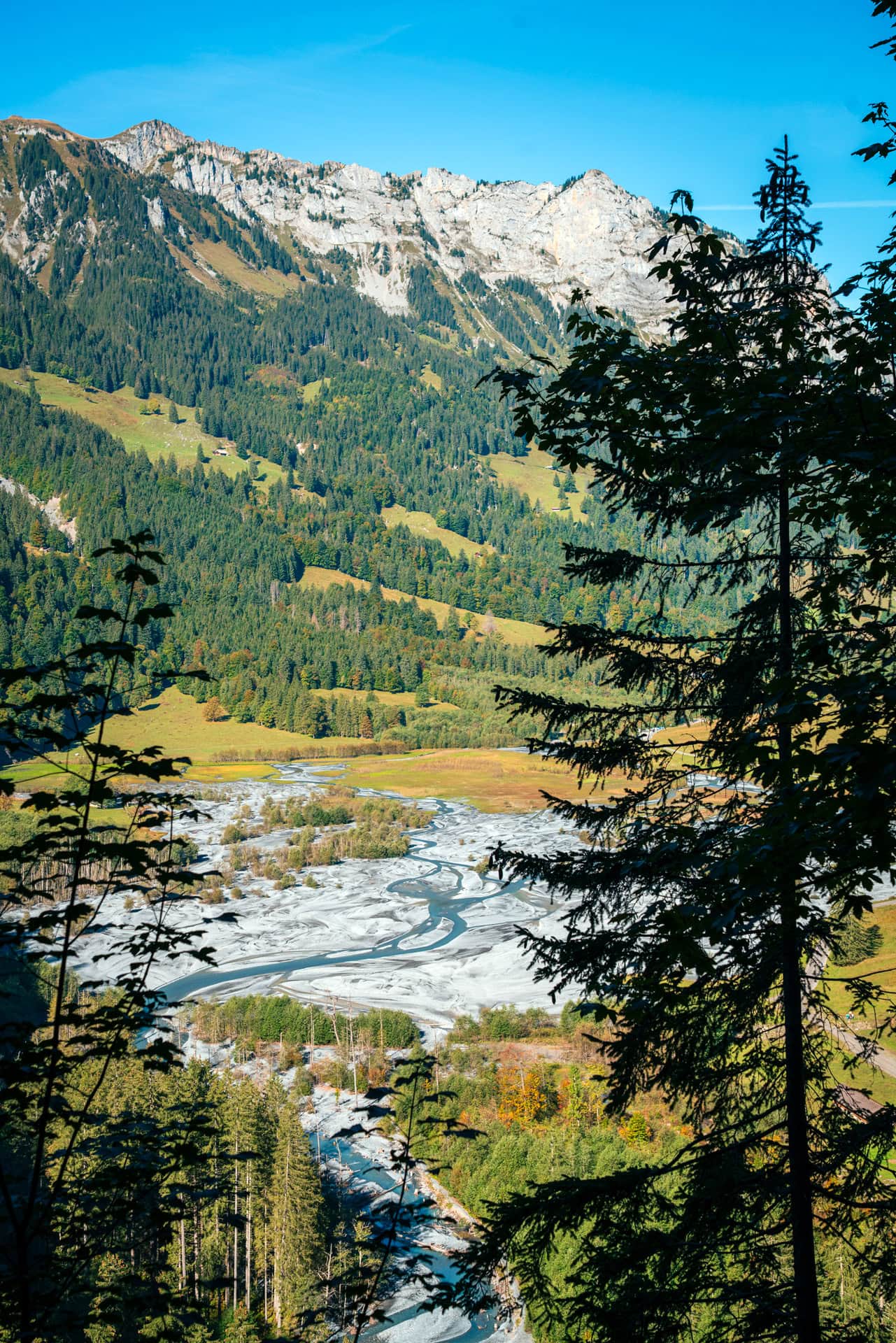
After just over one kilometre (0.6 mi.), we reach one of my favourite viewpoints of the hike. From here, we get our first look over Tschingelsee and its unusual landscape. If you love mountain lakes in the Bernese Oberland, you might also enjoy my Oeschinensee hike.
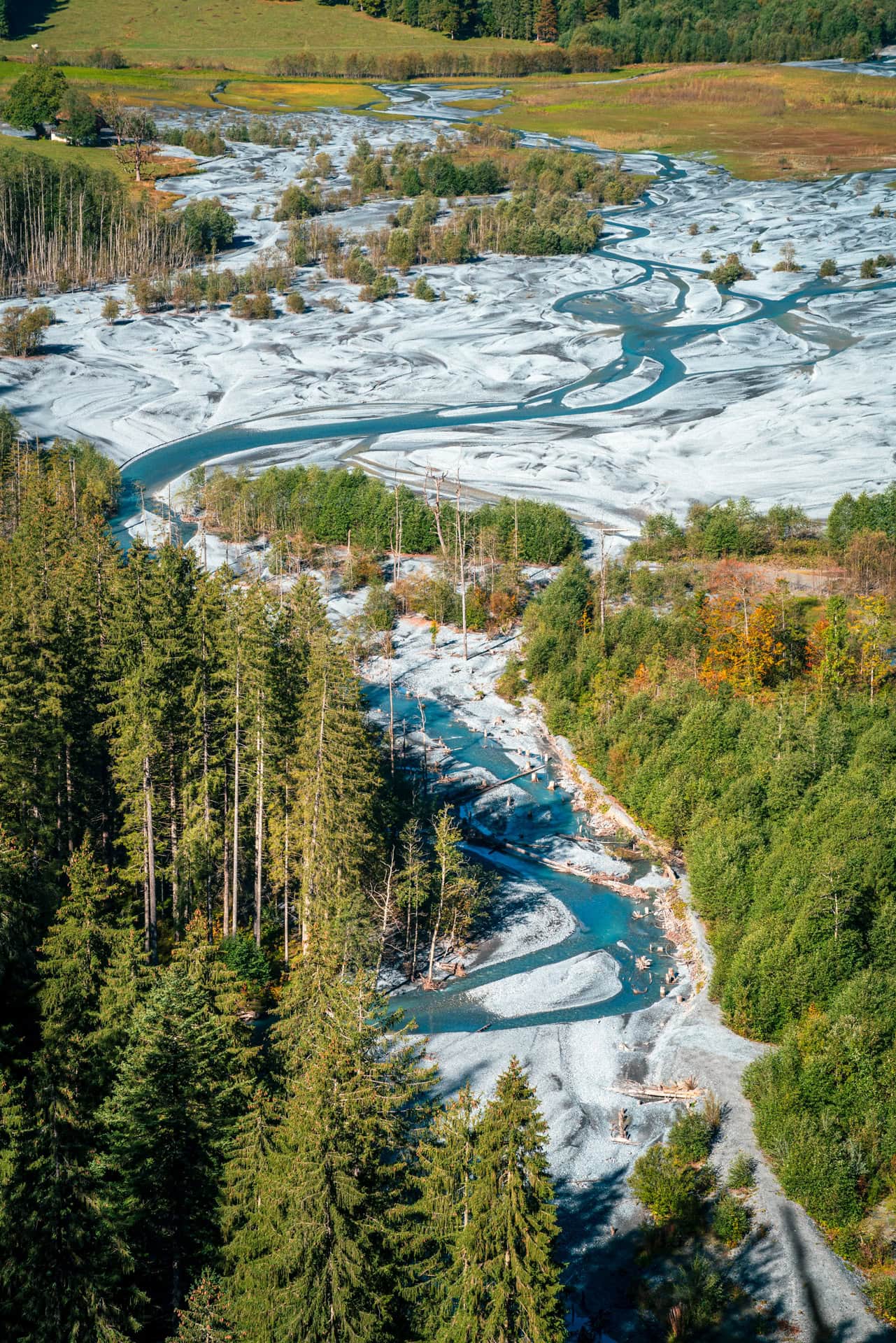
Instead of a classic mountain lake, Tschingelsee reveals a vast floodplain from above, with pale gravel banks, small pools and branching water channels. From this elevated viewpoint, you can clearly see how dynamic and constantly changing the landscape is. Tschingelsee is protected as a nature reserve and also lies within the Kiental Federal Game Reserve, which means drones are not permitted. Before flying anywhere nearby, it is also worth checking the official Swiss drone map from FOCA.
There is also a bench right next to the viewpoint, making it the perfect place to sit for a while and simply take in this extraordinary landscape.
Down into the Wild Griess Gorge
From here, the hike changes completely. The gentle alpine trail becomes much wilder, and our next destination is Griess Gorge with the Hexenkessel and Pochtenfall.
Even during the descent, it quickly becomes noticeably cooler between the high rock walls. In early October, temperatures were already fairly low, and the moisture and wind from the rushing water made the gorge feel several degrees colder. If you love wild gorges and waterfalls, you should also check out my Waterfall Arena Batöni hike in the Weisstannental.
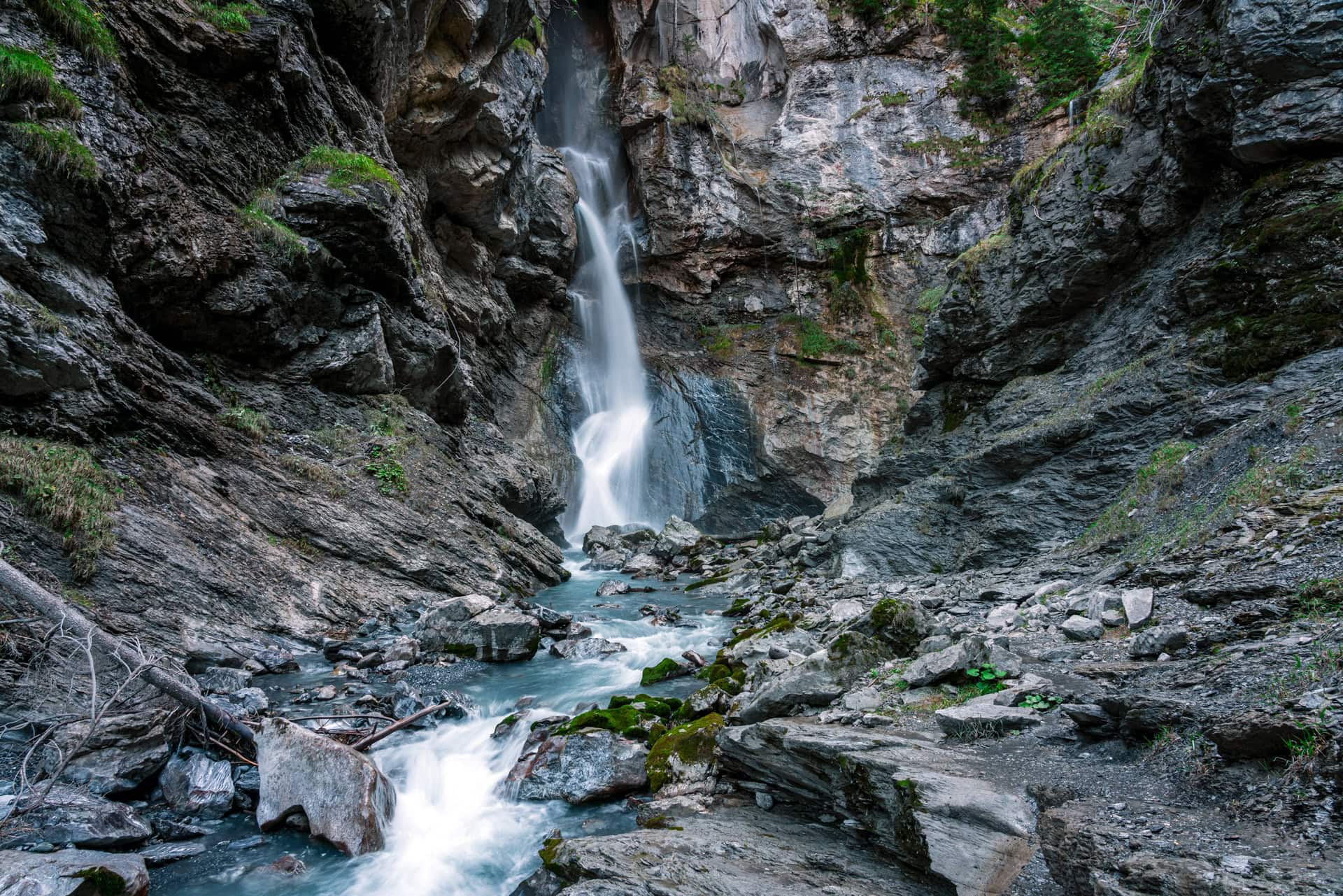
We take our time exploring the smaller side paths along the trail. Between the rocks, walkways and rushing water, new viewpoints keep appearing around every corner. Two of the most impressive spots are the Hexenkessel and the nearby Pochtenfall, where water from the Gamchibach plunges through the gorge.

From Tschingelsee Back into the Open Valley
After a while, we leave the gorge behind. The damp air and wind gradually make us feel cold, so we continue along the trail towards Tschingelsee.
Down in the valley, the perspective changes completely. The branching water channels and pale gravel flats that looked so dramatic from above are now almost at eye level. The trail also becomes easier here, following broad gravel sections through the open landscape.
After around 3 km (1.9 mi.) and roughly two hours, including plenty of photo stops, we finally reach the Chiene. From here, the landscape becomes greener and more forested again, with longer stretches of the trail running in the shade.
Relaxing Along the Chiene
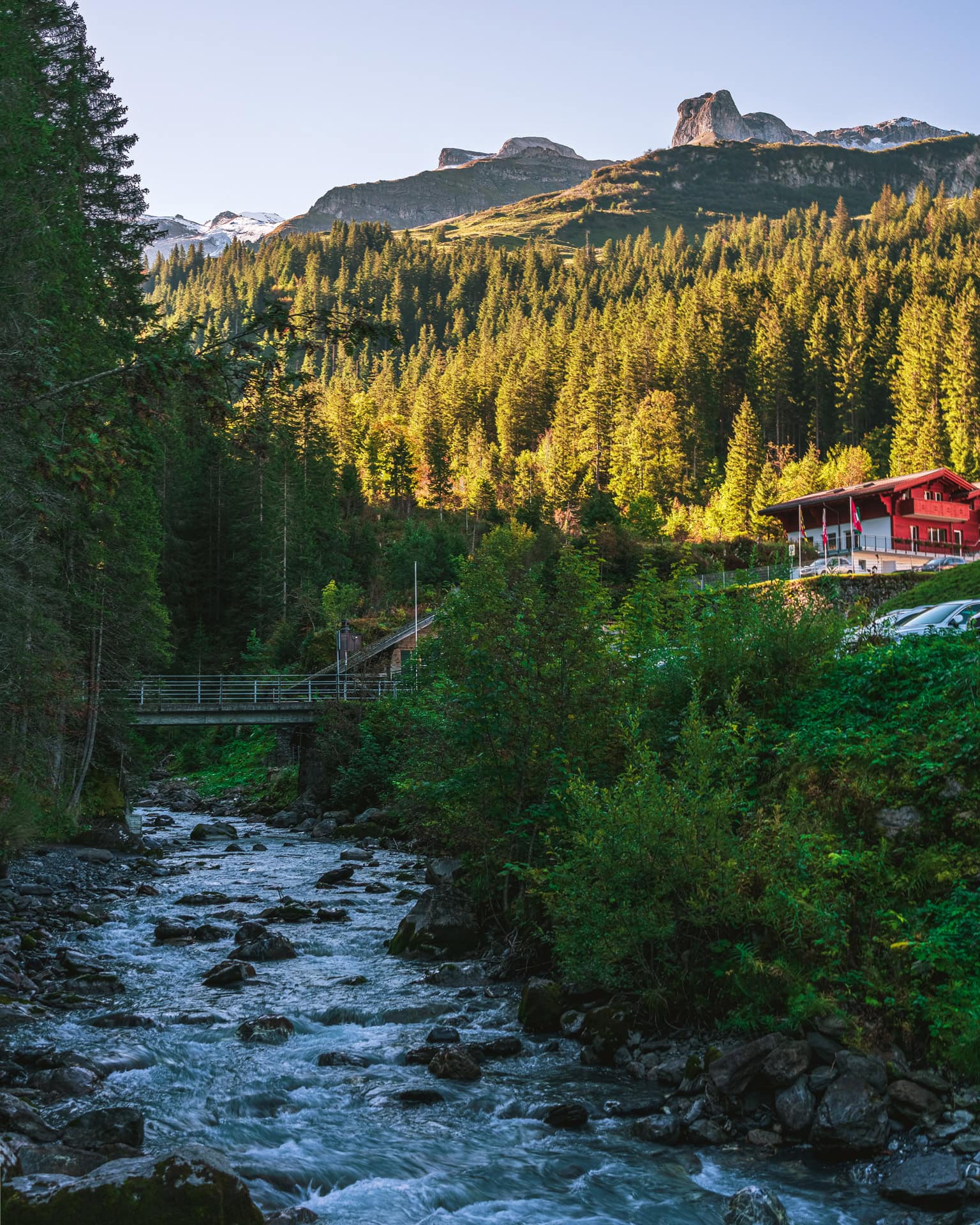
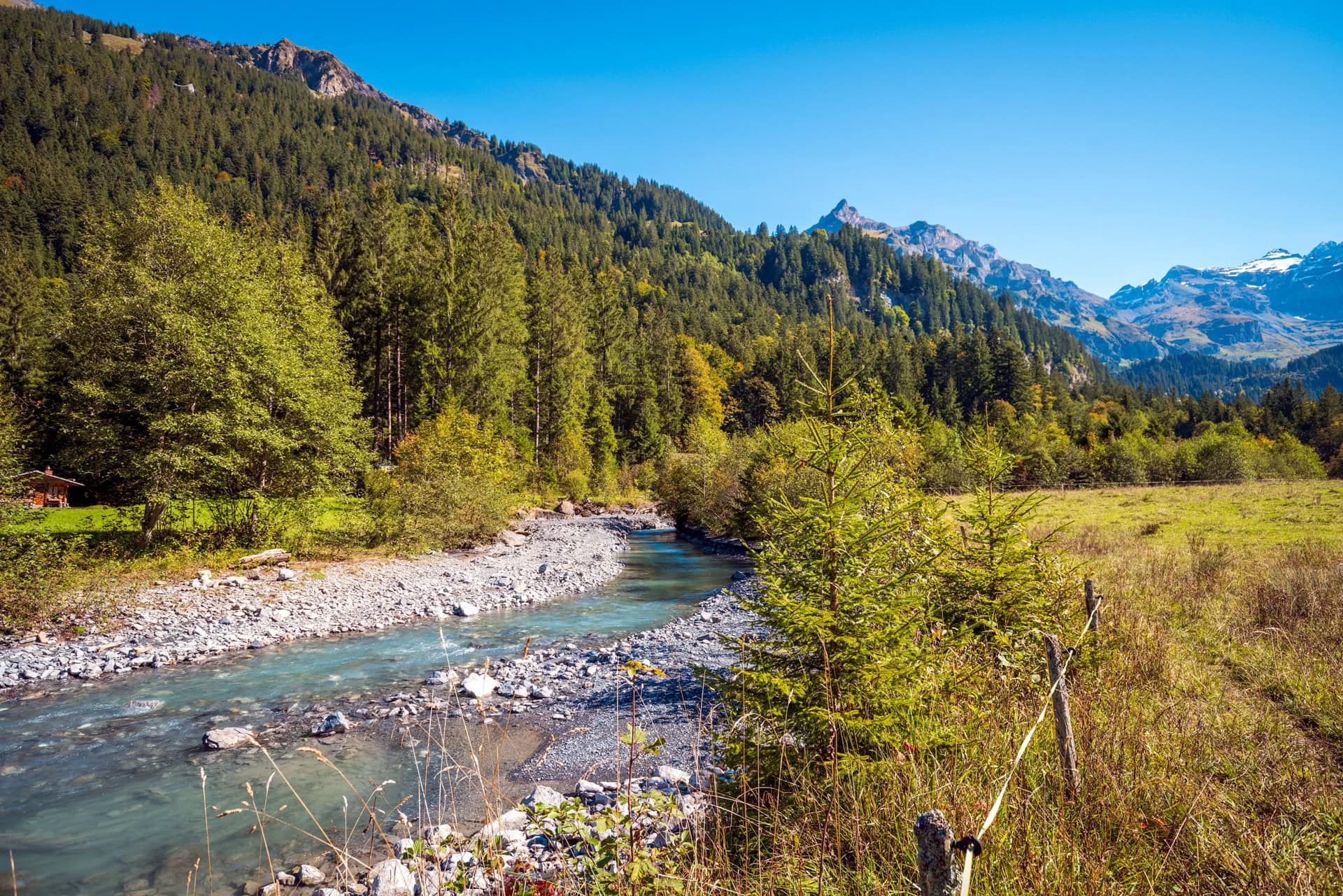
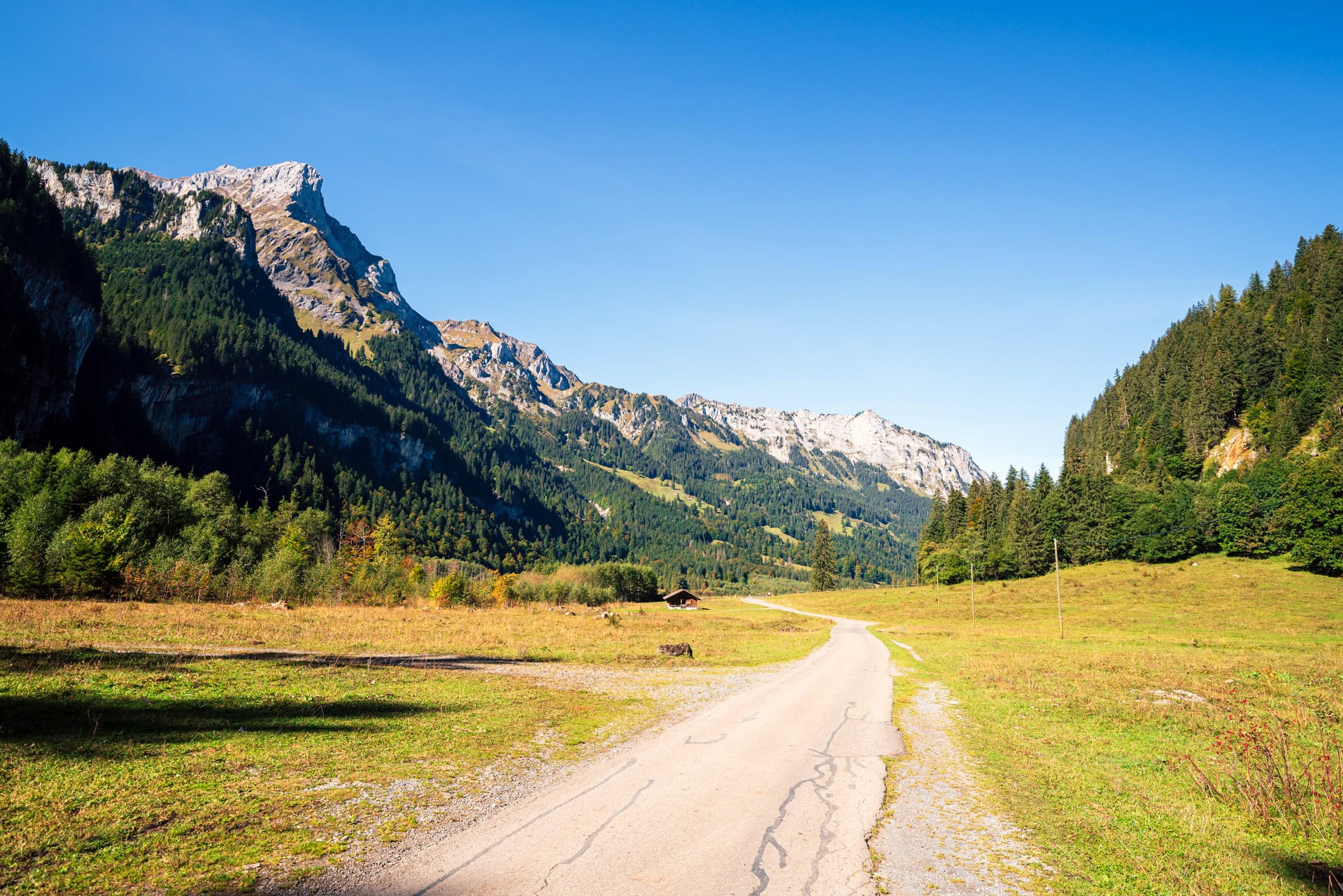
From here, the trail follows the Chiene at a relaxed pace, with the river accompanying us for much of the remaining route towards the village. Benches appear regularly right beside the water, making them perfect spots to slow down for a moment and simply listen to the sound of the river.
The hiking trail becomes narrower in places, leading through the forest and alongside the water. This section is therefore not suitable for regular strollers. After around three hours and approximately 7 km (4.3 mi.), we finally reach Kiental, bringing us close to the end of our relaxed autumn hike.
Kiental in Autumn
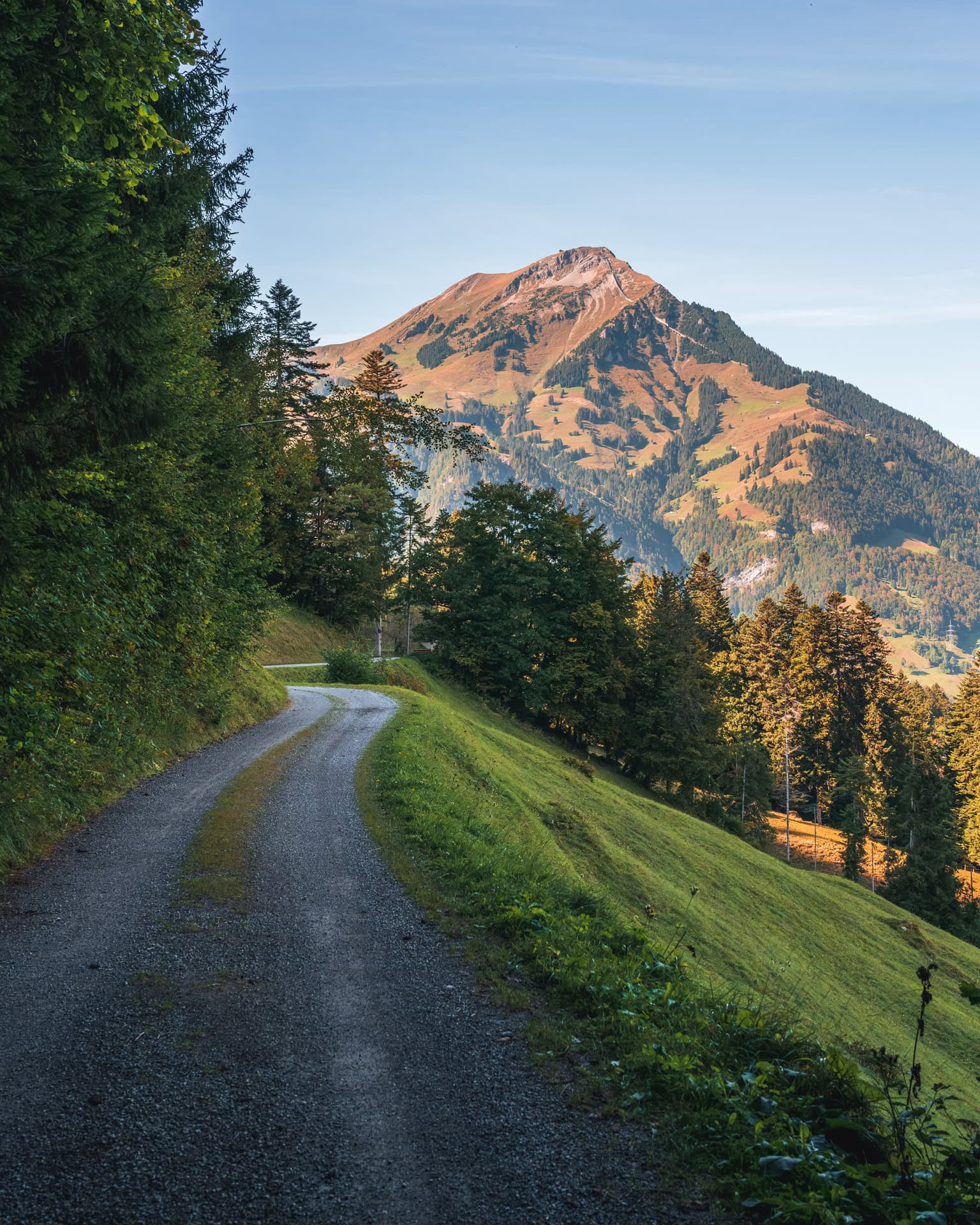
The village itself is also worth a short walk. Between traditional houses, green meadows and the surrounding mountains, beautiful views open up around every corner. In autumn, as the forests slowly change colour, the valley takes on an especially peaceful atmosphere.
If you still have enough energy after the hike, you could continue walking towards Reichenbach im Kandertal. However, this adds several more kilometres to the route. We therefore finish our hike at Kiental, Dorf, where the PostBus takes us back to Reichenbach. Especially in autumn, this is the more comfortable option, as it gets dark noticeably earlier in the evening.

Conclusion: Is This Autumn Hike Worth It?
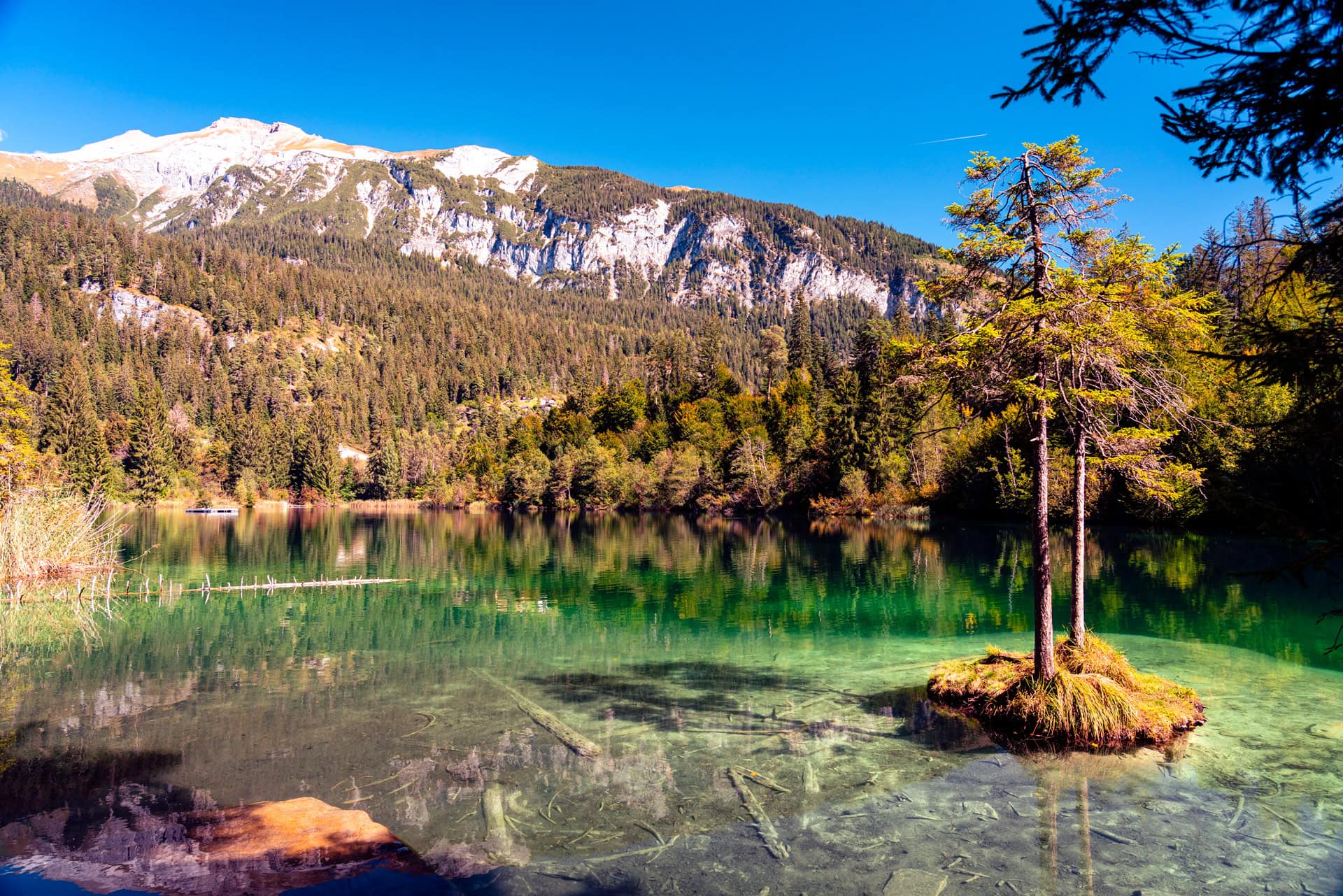
For us, this hike was a real surprise. Within just a few kilometres, alpine meadows, autumn forests, turquoise mountain water, a wild gorge and the extraordinary landscape around Tschingelsee constantly alternate, making the route feel incredibly varied.
We especially loved this hike from late September to early October, when the first trees begin to change colour and the trails become noticeably quieter after the main season. Along the way, we only came across a handful of other hikers.
If possible, we still recommend taking an early bus up, as the small PostBuses have limited capacity. Make sure to check the latest timetable before your hike, as the service operates seasonally. In 2026, buses run daily from 23 May to 18 October.
More Autumn Hikes
If you are looking for more autumn hikes, I can also recommend my route from Caumasee to Crestasee in Graubünden. There, you can expect beautiful lakes, forests, gorges and vibrant autumn colours, all set within a completely different landscape.
How Did You Like the Hike?
Have you already visited Kiental, or are you planning this hike for the coming autumn? Let me know in the comments how you liked it, or if you still have any questions about the route.
If you would like to do this hike later, make sure to save this post so you can easily find it again.
Frequently Asked Questions About the Griesalp – Tschingelsee – Kiental Hike
ℹ️ Click on a question to view the answer.
The hike is easy to moderate and runs mostly downhill. However, some sections through the gorge are steeper and can become slippery in wet conditions.
The actual hiking time is around 2 to 2.5 hours. With photo stops, breaks and time to enjoy Tschingelsee, we recommend allowing around 3.5 to 4 hours. The official PostBus route is listed at approximately two hours.
The hike is at its best from summer to early autumn. Late September and early October are especially beautiful, when the first autumn colours begin to appear. In 2026, the PostBus service to the upper valley runs until 18 October.
For individual travellers, usually no. Reservations are generally only required for groups of 10 or more people. However, some specific services may have special reservation rules, so it is worth checking the latest timetable before your trip.
Tschingelsee does not look like a typical alpine lake. From above, its pale gravel flats and branching milky blue-white water channels are especially striking, making this unique landscape one of the most photogenic spots along the hike.
No. Entering the water or the protected shoreline vegetation is not permitted within the nature reserve.
No, you should not fly a drone in the protected area around Tschingelsee. The landscape can still be photographed beautifully from several elevated viewpoints along the hiking trail.
Yes, the hike is varied and enjoyable for children who are already confident hikers, with a lake, gorge, rushing mountain water and forest along the way. It is not suitable for regular strollers because several sections follow narrow and uneven hiking trails.
Yes, dogs can generally join the hike. However, around the protected Tschingelsee, they should be kept on a leash and must not enter the water. The gorge also includes metal grating walkways, which may be uncomfortable for some dogs.
The highlights include the spectacular PostBus ride, the panoramic view over Tschingelsee, the wild Griess Gorge with the Hexenkessel and waterfall, and the peaceful hiking trail along the Chiene all the way to Kiental.